
Brentwood: (615) 235-1966


Complete vs. Partial Dentures: What’s the Difference?
Brentwood and Lewisburg, TN
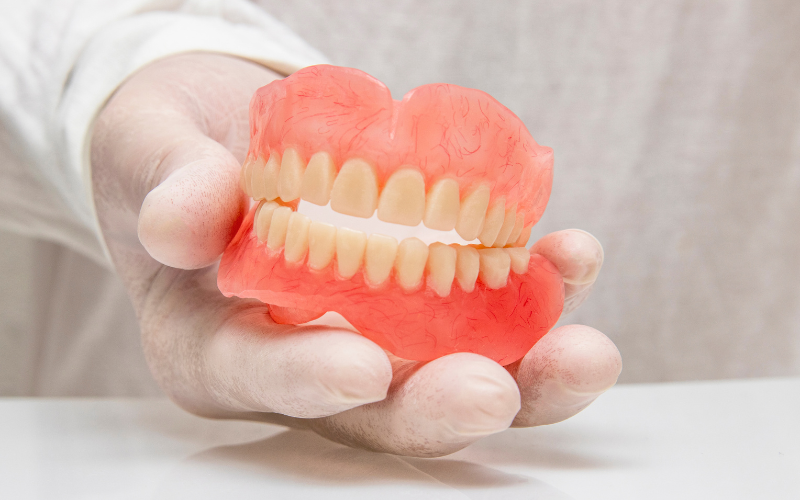
Are you wondering if full dentures or partial dentures are right for you? If you’ve lost teeth, dentures can be a great way to restore your smile and improve oral function. But which type of denture should you choose? Understanding the difference between complete and partial dentures is key to making the best choice for your oral health.
In this blog, we’ll explore both options, highlighting the benefits and concerns of each. By the end, you’ll have the information needed to make an informed decision.
What Are Complete Dentures?
Definition and Purpose
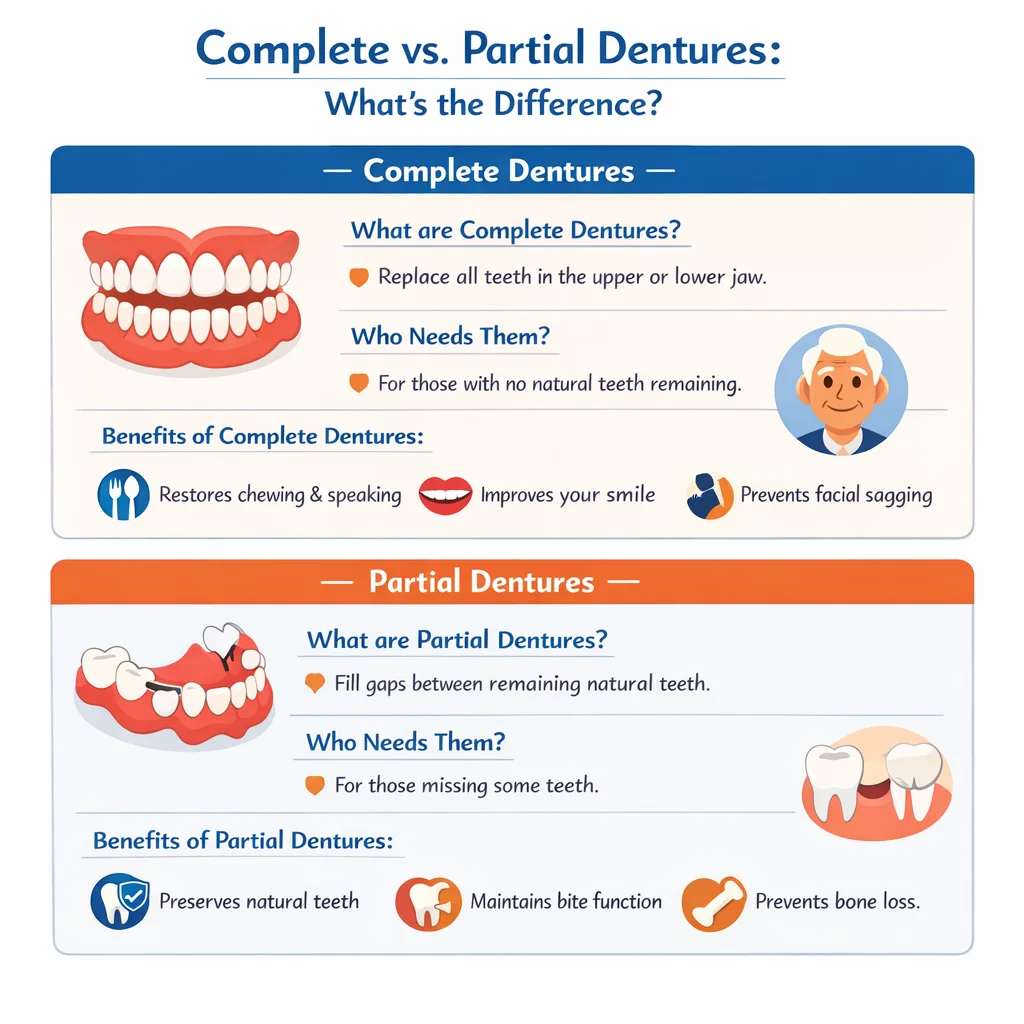
Complete dentures, also known as full dentures, are a set of prosthetic teeth designed to replace all of the natural teeth in either the upper or lower jaw. These dentures are custom-made to fit comfortably in your mouth, providing a natural-looking appearance and restoring your ability to chew and speak.
Full dentures are typically recommended for individuals who have lost all of their teeth due to decay, injury, or age-related conditions.
Benefits of Complete Dentures
Complete dentures not only restore the functionality of your mouth but also help in boosting your confidence by improving your smile. They provide full coverage for the upper or lower jaw, ensuring you can chew and speak clearly.
Additionally, dentures can help with preserving your facial structure by preventing the sunken look that can occur when teeth are missing. With modern materials, complete dentures offer an aesthetic, comfortable solution for people who have lost all their teeth.
Another significant benefit of full dentures is improved oral health. By filling in the gaps left by missing teeth, complete dentures can help prevent bone loss in the jaw, which is a common issue for people without teeth.
Common Concerns with Complete Dentures
While complete dentures can significantly improve your quality of life, there are a few concerns you should be aware of. One issue many people experience is the fit of their dentures. Over time, your gums may change shape, causing the dentures to feel loose or uncomfortable. Regular adjustments are necessary to maintain a secure fit.
Maintenance is another consideration. Dentures in Lewisburg require daily cleaning to keep them free from plaque buildup and maintain their appearance. Lastly, there can be an adjustment period as you get used to wearing dentures, especially when eating or speaking.
Video source: “Talking Dentures” YouTube channel
What Are Partial Dentures?
Definition and Purpose
Partial dentures are designed for individuals who still have some natural teeth remaining. Unlike complete dentures, which replace all of the teeth, partial dentures fill in the gaps created by missing teeth while leaving the healthy natural teeth intact. They are often connected by a metal or acrylic framework, which attaches to the remaining teeth, helping to hold them in place.
Partial dentures are ideal for patients who have lost a few teeth but still have enough healthy teeth to support the prosthesis. They are custom-made to fit the patient’s unique mouth structure, ensuring comfort and functionality.
Benefits of Partial Dentures
Partial dentures offer a few distinct advantages over complete dentures. One of the main benefits is that they preserve your remaining natural teeth. By filling in the gaps between teeth, partial dentures reduce the risk of your remaining teeth shifting out of place. They also provide the opportunity to maintain a more natural bite and chew function.
Another benefit of partial dentures is that they help prevent bone loss. When teeth are missing, the jawbone can begin to deteriorate, but partial dentures help preserve the integrity of the bone by stimulating it and filling in the gaps left by missing teeth.
Common Concerns with Partial Dentures
While partial dentures are highly effective, they do come with some concerns. Fit and comfort are common issues, as the metal framework or clasps can sometimes irritate the gums or surrounding teeth.
Additionally, partial dentures require regular maintenance and cleaning to avoid plaque buildup and maintain their function. Like complete dentures, partial dentures may require periodic adjustments as your mouth changes over time.
Key Differences Between Complete and Partial Dentures
Coverage Area
One of the primary distinctions between complete and partial dentures is the coverage area they provide. Complete dentures are designed to replace all the teeth in either the upper or lower jaw. They are an ideal solution for people who have lost all of their natural teeth due to decay, injury, or other factors.
Complete dentures provide full coverage, restoring both the function and appearance of your mouth. They help fill out the natural contours of your face, preventing the sunken look that can occur when teeth are lost.
On the other hand, partial dentures are used for patients who still have some natural teeth remaining. These dentures are custom-made to fit around the existing teeth, filling in the gaps left by missing teeth.
Unlike complete dentures, partial dentures do not cover the entire mouth but are designed to selectively replace only the missing teeth. This option preserves your remaining healthy teeth and can help maintain your natural bite and overall oral health.
Treatment Needs
The treatment requirements for complete and partial dentures differ, primarily based on the amount of tooth loss and the condition of the remaining teeth. Complete dentures typically require more extensive preparation. If all teeth are missing, your dentist will first assess the health of your gums and jawbone to ensure they can support the dentures.
In some cases, extractions may be necessary if there are still remaining teeth that cannot be saved. Once the gums have healed (which can take several weeks), the dentist will take impressions of your mouth to create a custom denture that fits your mouth comfortably.
For partial dentures, the treatment process is slightly different, as some natural teeth are still present. Partial dentures often require your dentist to check the condition of these remaining teeth to make sure they can support the new prosthesis.
In some cases, adjustments or crowns may be placed on the remaining teeth to improve the fit and stability of the partial dentures. The process is generally quicker than with complete dentures, but periodic checkups are needed to ensure that the partial dentures fit well as your natural teeth and gums change over time.
Maintenance
The maintenance of both complete and partial dentures is crucial for their longevity and effectiveness. Complete dentures need to be cleaned thoroughly each day to prevent plaque and bacteria buildup. Unlike natural teeth, dentures cannot be brushed with regular toothpaste, as it can be too abrasive. Special denture cleaners or a mild soap and water solution should be used.
Additionally, complete dentures must be removed nightly to allow the gums to rest and to avoid damaging the denture material. Over time, dentures may need to be relined or adjusted to ensure they continue to fit properly as the mouth changes shape.
Partial dentures, while also requiring daily cleaning, have an additional maintenance consideration. Since partial dentures are attached to natural teeth using clasps or frameworks, those remaining teeth must be cleaned regularly as well. This involves brushing the teeth as you would normally, as well as cleaning the partial dentures themselves.
Partial dentures should also be removed and cleaned after meals to prevent food particles from accumulating around the clasps. Adjusting to eating with dentures can take some time, but with patience and practice, it gradually becomes easier and more comfortable. Like complete dentures, partial dentures may require occasional adjustments over time as your remaining teeth shift or change.
Cost Considerations
When it comes to cost, there is a notable difference between complete and partial dentures. Complete dentures tend to be more expensive than partial dentures because they replace all the teeth in the jaw. The cost of complete dentures includes the impressions, fittings, and any required adjustments or relining that may be necessary as the mouth changes. Materials used to fabricate the dentures, such as acrylic or porcelain, also influence the price.
Partial dentures are generally less costly since they only replace missing teeth and do not cover the entire arch. However, the final cost of partial dentures can vary depending on the materials used and the complexity of the design. The condition of the remaining natural teeth is another factor that may affect the price, especially if crowns or additional procedures are required to ensure a secure fit. The framework of partial dentures, typically made of metal or acrylic, will also influence the price.
In both cases, insurance coverage may help offset some of the cost, though it is important to check with your provider to understand what is covered. Regular maintenance, including relining or adjusting dentures, will also add to the long-term cost of both complete and partial dentures.
Which Type of Denture Is Right for You?
When deciding between complete and partial dentures, there are several factors to consider. The most important consideration is the number of teeth you have left. If you’ve lost all of your teeth, complete dentures are likely your best option. However, if you still have several healthy teeth, partial dentures may be a better solution, as they help preserve the integrity of your remaining teeth.
Your oral health plays a significant role in choosing the right dentures in Lewisburg as well. If your gums are healthy and your remaining teeth are strong, partial dentures can provide a stable solution. However, if your teeth are damaged or your gums are unhealthy, complete dentures may be the more effective option.
Finally, your personal preferences will also play a role. Some people prefer the full coverage and security of complete dentures, while others opt for the convenience and preservation of their natural teeth with partial dentures. Discuss your options with your dentist at Hallmark Dental, who can help you decide which solution is best for your unique situation.
In conclusion, both complete and partial dentures offer effective solutions for individuals with missing teeth. While complete dentures provide a full set of teeth for those who have lost all their teeth, partial dentures are ideal for those who still have some natural teeth remaining. At Hallmark Dental, we are committed to helping you make the best choice for your oral health.
If you’re considering dentures, don’t hesitate to reach out to Hallmark Dental. Our team of professionals is here to help you restore your smile and improve your quality of life. Contact Hallmark Dental today to schedule a consultation and explore the best denture options for your needs!
What patients Ask About Dentures
How long do dentures last?
Dentures typically last 5-10 years, but they may need adjustments or relining over time due to changes in your mouth’s shape.
Are complete dentures better than partial dentures?
It depends on your dental needs. Complete dentures are best for those with no remaining teeth, while partial dentures are ideal for those with some healthy teeth still in place.
Do dentures affect speech?
It can take some time to adjust, but most people can speak normally with dentures. Practice and patience help improve clarity.
Will partial dentures damage my natural teeth?
When properly fitted, partial dentures should not damage your natural teeth. However, it’s important to maintain regular checkups to ensure proper fit.